What Is Required to Have a Dihybrid Cross Resulting in a 9:3:3:1 Phenotypic Ratio?
Gene Interactions
The genes of an individual do non operate isolated from 1 another, but evidently are operation in a common cellular environment. Thus, it is expected interactions between genes would occur. Bateson and Punnett performed a classical experiment that demonstrated genetic interactions. They analyzed the three comb types of chicken known to exist at that fourth dimension:
| Craven Varieties | Phenotype |
|---|---|
| Wyandotte | Rose Comb |
| Brahmas | Pea Rummage |
| Leghorns | Single Rummage |
Rose  Pea
Pea
Single 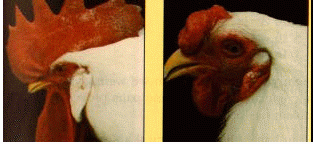 Walnut

Outcome: The F1 differed from both parents and two new phenotypes not seen in the parents appeared in the F2. How can this result be explained? The first clue is the F2 ratio. We have seen this ratio before when the F1 from a dihybrid cross is selfed (or intermated). This ascertainment suggests that 2 genes may control the phenotype of the rummage. The gene interactions and genotypes were determined past performing the appropriate testcrosses.
A series of experiments demonstrated that the genotypes controlling the various comb phenotypes are as follows.
| Phenotypes | Genotypes | Frequency |
|---|---|---|
| Walnut | R_P_ | 9/xvi |
| Rose | R_pp | 3/16 |
| Pea | rrP_ | 3/16 |
| Single | rrpp | 1/16 |
It was later shown that the genotypes of the initial parents were:
Rose = RRpp
Pea = rrPP
Therefore, genotypically the cantankerous was:

The development of any individual is plainly the expression of all the genes that are a part of its genetic makeup. Therefore, information technology is not an unexpected decision that more than than one factor could exist responsible for the expression of a single phenotype. We will now discuss this state of affairs. First let's requite a definition.
Epistasis - the interaction between two or more than genes to control a single phenotype
The interactions of the ii genes which control rummage type was revealed because we could identify and recognize the 9:3:3:1. Other genetic interactions were identified because the results of crossing two dihybrids produced a modified Mendelian ratio. All of the results are modifications of the 9:3:3:one ratio.
Example ane: 15:i Ratio
Phenotypes: Kernel Color in Wheat


For this blazon of pathway a functional enzyme A or B can produce a production from a common precursor. The production gives colour to the wheat kernel. Therefore, but one dominant allele at either of the two loci is required to generate the product.
Thus, if a pure line wheat plant with a colored kernel (genotype = AABB) is crossed to plant with white kernels (genotype = aabb) and the resulting F1 plants are selfed, a modification of the dihybrid 9:3:three:1 ratio volition be produced. The post-obit table provides a biochemical explanation for the xv:1 ratio.
| Genotype | Kernel Phenotype | Enzymatic Activities |
|---|---|---|
| nine A_B_ | colored kernels | functional enzymes from both genes |
| three A_bb | colored kernels | functional enzyme from the A gene pair |
| 3 aaB_ | colored kernels | functional enzyme from the B gene pair |
| 1 aabb | colorless kernels | non-functional enzymes produced at both genes |
If we sum the three different genotypes that will produce a colored kernel we can see that we tin can achieve a 15:1 ratio. Considering either of the genes tin provide the wild blazon phenotype, this interaction is chosen duplicate factor activeness.
Case 2: 9:seven Ratio
Example: Flower color in sweet pea
If two genes are involved in a specific pathway and functional products from both are required for expression, and so one recessive allelic pair at either allelic pair would result in the mutant phenotype. This is graphically shown in the following diagram.

If a pure line pea plant with colored flowers (genotype = CCPP) is crossed to pure line, homozygous recessive constitute with white flowers, the F1 plant will have colored flowers and a CcPp genotype. The normal ratio from selfing dihybrid is nine:three:3:one, but epistatic interactions of the C and P genes will give a modified nine:seven ratio. The following table describes the interactions for each genotype and how the ratio occurs.
| Genotype | Bloom Color | Enzyme Activities/Thursday> |
|---|---|---|
| nine C_P_ | Flowers colored; anthocyanin produced | Functional enzymes from both genes |
| three C_pp | Flowers white; no anthocyanin produced | p enzyme non-functional |
| iii ccP_ | Flowers white; no anthocyanin produced | c enzyme non-functional |
| i ccpp | Flowers white; no anthocyanin produced | c and p enzymes non-functional |
Considering both genes are required for the correct phenotype, this epistatic interaction is called complementary cistron action.
Instance iii: 12:3:1 Ratio
Phenotype: Fruit Color in Squash
With this interaction, color is recessive to no color at 1 allelic pair. This recessive allele must exist expressed before the specific color allele at a second locus is expressed. At the first gene white colored squash is dominant to colored squash, and the factor symbols are Westward=white and w=colored. At the second cistron yellow is dominant to light-green, and the symbols used are G=yellow, grand=dark-green. If the dihybrid is selfed, three phenotypes are produced in a 12:3:1 ratio. The following table explains how this ratio is obtained.
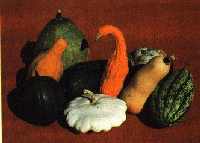 Shapes of Squash Fruit
| Genotype | Fruit Colour | Gene Actions |
|---|---|---|
| 9 W_G_ | White | Dominant white allele negates event of 1000 allele |
| 3 W_gg | White | Dominant white allele negates upshot of G allele |
| three wwG_ | Yellowish | Recessive color allele allows yellow allele expression |
| one wwgg | Green | Recessive color allele allows green allele expression |
Because the presence of the ascendant Westward allele masks the furnishings of either the G or thou allele, this type of interaction is called dominant epistasis.
Example 4: xiii:3 ratio
Phenotype: Malvidin production in Primula
Certain genes take the ability to suppress the expression of a factor at a second locus. The production of the chemical malvidin in the plant Primula is an example. Both the synthesis of the chemical (controlled past the K gene) and the suppression of synthesis at the K cistron (controlled by the D cistron) are dominant traits. The Fone plant with the genotype KkDd volition non produce malvidin because of the presence of the dominant D allele. What will be the distribution of the F2 phenotypes later the F1 was crossed?
| Genotype | Phenotype and genetic explanation |
|---|---|
| 9 K_D_ | no malvidin considering ascendant D allele is present |
| iii K_dd | malvidin productions because dominant K allele nowadays |
| 3 kkD_ | no malvidin because recessive thousand and dominant D alleles present |
| i kkdd | no malvidin because recessive k allele present |
The ratio from the in a higher place table is thirteen no malvidin production to iii malvidin product. Because the activeness of the dominant D allele masks the genes at the One thousand locus, this interaction is termed ascendant suppression epistasis.
Suppressor - a genetic factor that prevents the expression of alleles at a 2nd locus; this is an example of epistatic interaction
Remember that epistasis is the interaction between unlike genes. If one allele or allelic pair masks the expression of an allele at the second gene, that allele or allelic pair is epistatic to the second cistron. Therefore, the post-obit table summarizes the iv epistatic interactions discussed above.
| Example | Allelic Interactions | Type of Epistasis |
|---|---|---|
| Wheat kernel color | A epistatic to B, b B epistatic to A, a | Duplicate genes |
| Sweetness pea flower color | cc epistatic to P, p pp epistatic to C, c | Complementary cistron action |
| Squash Fruit Color | W epistatic to G, 1000 | Ascendant epistasis |
| Primula malvidin production | D epistatic to K, k | Dominant suppression |
Copyright © 2000. Phillip McClean
Source: https://www.ndsu.edu/pubweb/~mcclean/plsc431/mendel/mendel6.htm
0 Response to "What Is Required to Have a Dihybrid Cross Resulting in a 9:3:3:1 Phenotypic Ratio?"
Post a Comment