If a Function is Differentiable Then It is Continuous Negation
In This Article
-
What is Differentiable?
-
What Makes a Function Non-Differentiable?
-
What is the Difference Between Differentiable and Continuous?
-
Common Derivative Formulas
What is Differentiable?
What does differentiable mean? If a function is differentiable, its derivative exists at every point in its domain. If a function is differentiable at a point , the limit of the average rate of change of over the interval as approaches 0 exists.
Let's unpack what the limit means. The function inside this limit probably looks familiar. The average rate of change over an interval, otherwise known as the difference quotient, measures a function's slope between two points.
This slope value represents how fast a function's output values (y-values) change with respect to its input (x-values). The delta symbol is used to represent the value that a variable changes by.
The formula for the average rate of change of the function over the interval is below.
Difference Quotient
The difference quotient is also commonly represented like this:
or where
Here, the delta symbol represents the value that changes by. When we make approach 0 in the limit below, we can find the derivative of a function or instantaneous rate of change. This value also represents the slope of the tangent line.
If this limit exists, then is the derivative of . This is denoted by or .
Dr. Hannah Fry dives more into what a derivative is:
Differentiable Examples
Let's look at some differentiable examples of functions.
All polynomial functions are differentiable everywhere, as are constant functions. A rational function is differentiable except at the x-value that makes its denominator 0.
What Makes a Function Non-Differentiable?
Now, let's learn how to find where a function is not differentiable. If a function has any discontinuities, it is not differentiable at those points. In order to be differentiable, a function must be continuous. The output value must be defined for each input value.
Second, the limit as approaches the difference quotient must exist in order for a function to be differentiable at a point . The limit does not exist if the limit as approaches 0 from the left does not equal the limit as approaches 0 from the right.
This might happen if a function is not continuous at , or if the function's graph has a corner point, cusp, or vertical tangent.
Knowing what corner points, cusps, vertical tangents, and discontinuities look like on a graph can help you pinpoint where a function is not differentiable. Let's examine some non-differentiable graph examples below.
Corner
The function is an example of a function with corner points, such as at . A corner point looks like two linear sections of a function that meet at a sharp point.
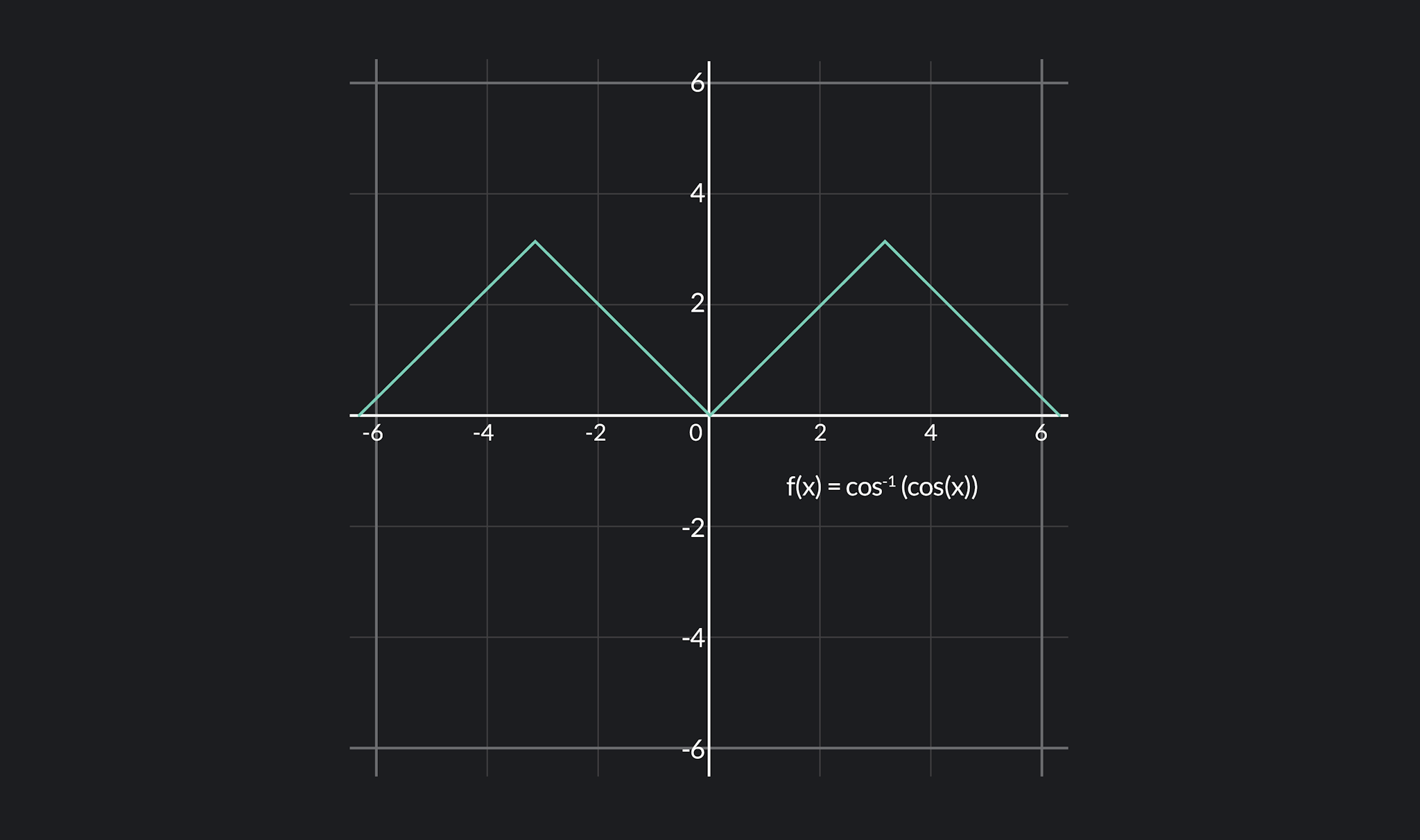

The slope of the tangent line to the left of a corner point is different from the slope to the right of the corner point. Because of this, a function's slope is not defined at a corner point, so its derivative cannot be calculated there.
Cusp
The function is an example of a function with a cusp at . A cusp looks like two curves that meet at a sharp point.

The slopes of the tangent lines to the left of the cusp approach , while the slopes of the tangent lines to the right of the cusp approach . Because of this, a function's slope is not defined at a cusp, so its derivative cannot be calculated there.
Vertical Tangent
The function is an example of a function with a vertical tangent. At , the slope of the tangent line approaches infinity.
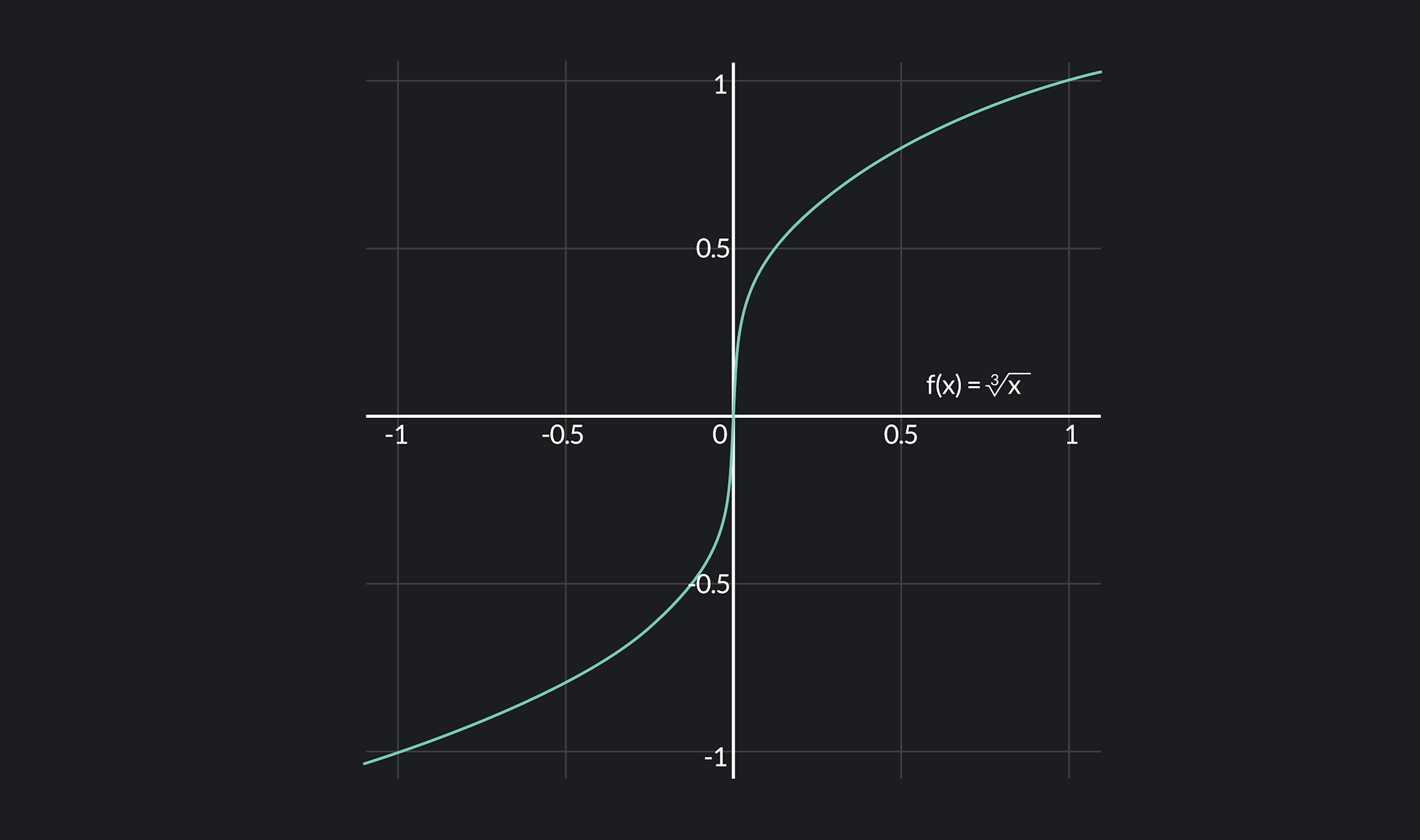
A function has a vertical tangent at if is continuous at and if the slope of the tangent line at approaches either negative infinity or positive infinity.
Discontinuity
The function , where represents the unit-step function, is an example of a function with a discontinuity. For example, there are jump continuities at and .
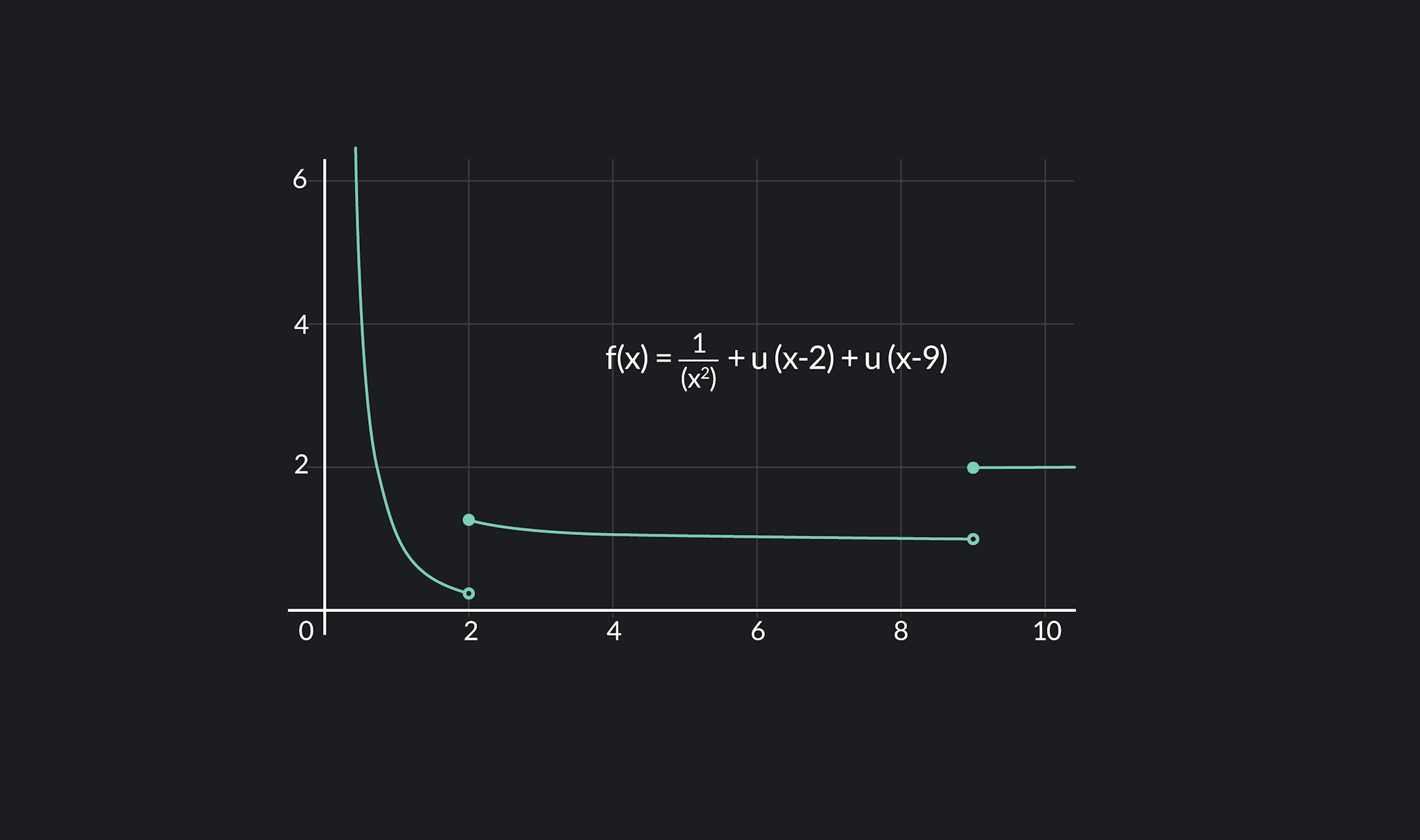
Since the limit as approaches these points from the left does not equal the limit as approaches these points from the right, is not differentiable at these points.
What is the Difference Between Differentiable and Continuous?
A differentiable function must be continuous. However, the reverse is not necessarily true. It's possible for a function to be continuous but not differentiable. (If needed, you can review our full guide on continuous functions.)
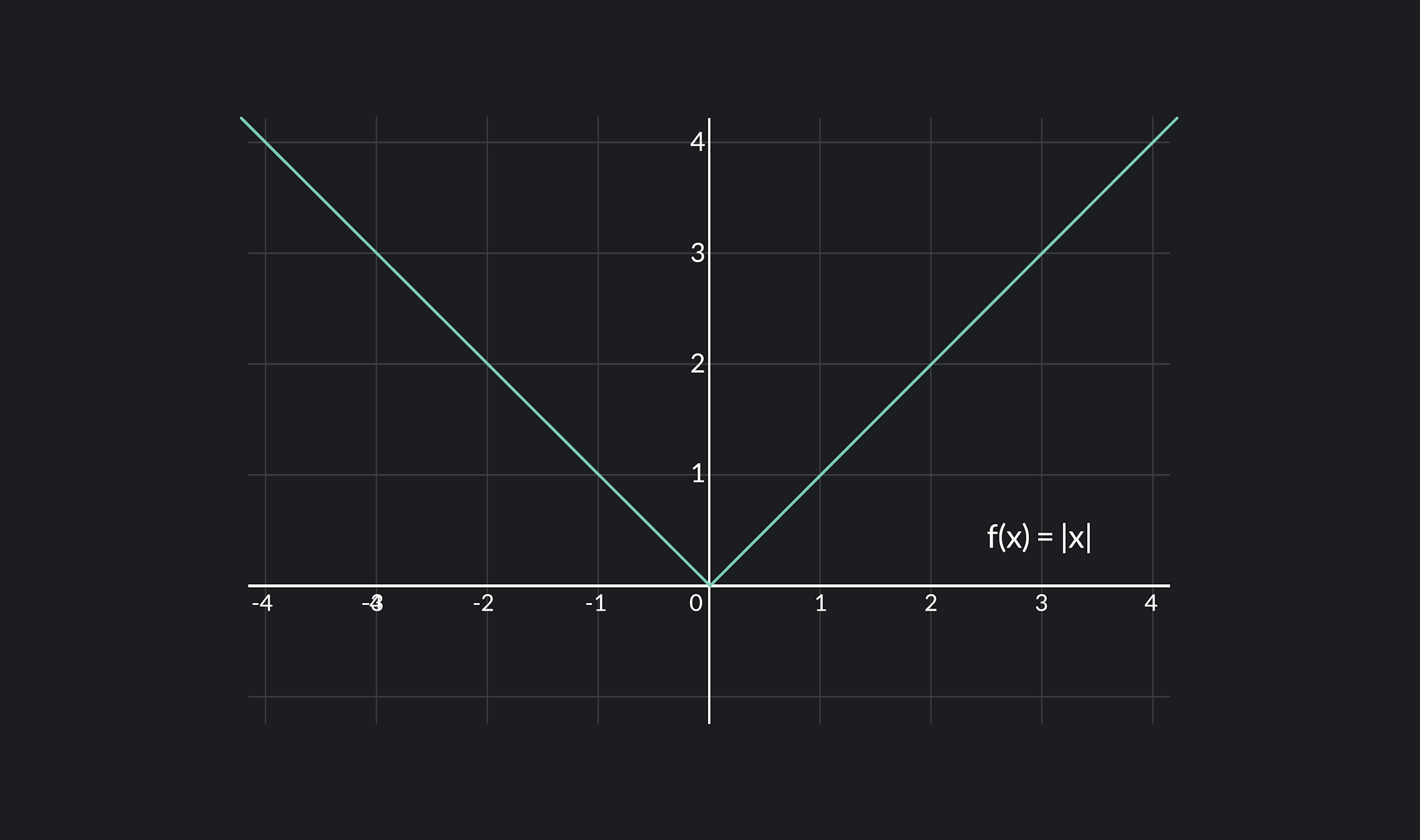
Let's examine what it means to be a differentiable versus continuous function. For example, consider the absolute value function below.
This function is continuous everywhere because we can draw its curve without ever lifting a hand. Its curve has no holes, breaks, jumps, or vertical asymptotes. However, at , the function is not differentiable.
How can we tell this function is not differentiable?
We know it's non-differentiable because there's a corner point at . This makes it impossible to draw the tangent line to at . More precisely, the absolute value function fails the limit definition of differentiability at .
Let's verify that the absolute value function fails the limit definition of differentiability at by plugging at into the limit definition of a derivative formula. So that we don't confuse and , we'll substitute the variable for .
We are calculating for at .
Here's what we get:
Plugging in , we have:
Let's stop and take a closer look at the function , which can be written as a piecewise function. This piecewise function represents , the derivative of our function .

We can use this piecewise function to finish evaluating our limit and to understand why is non-differentiable at .
First, let's take the limit as approaches 0 from the right. Imagine as a slightly positive value, so that .
Looking at our piecewise function, we can plug in for . Remember that the limit as approaches a constant value is simply the constant value itself.
Now, let's take the limit as
=
Here's what it'll look like:
Notice that , since . In order for a limit to exist, the right-handed limit must equal the left-handed limit.
On our graph of below, this looks like a jump discontinuity.
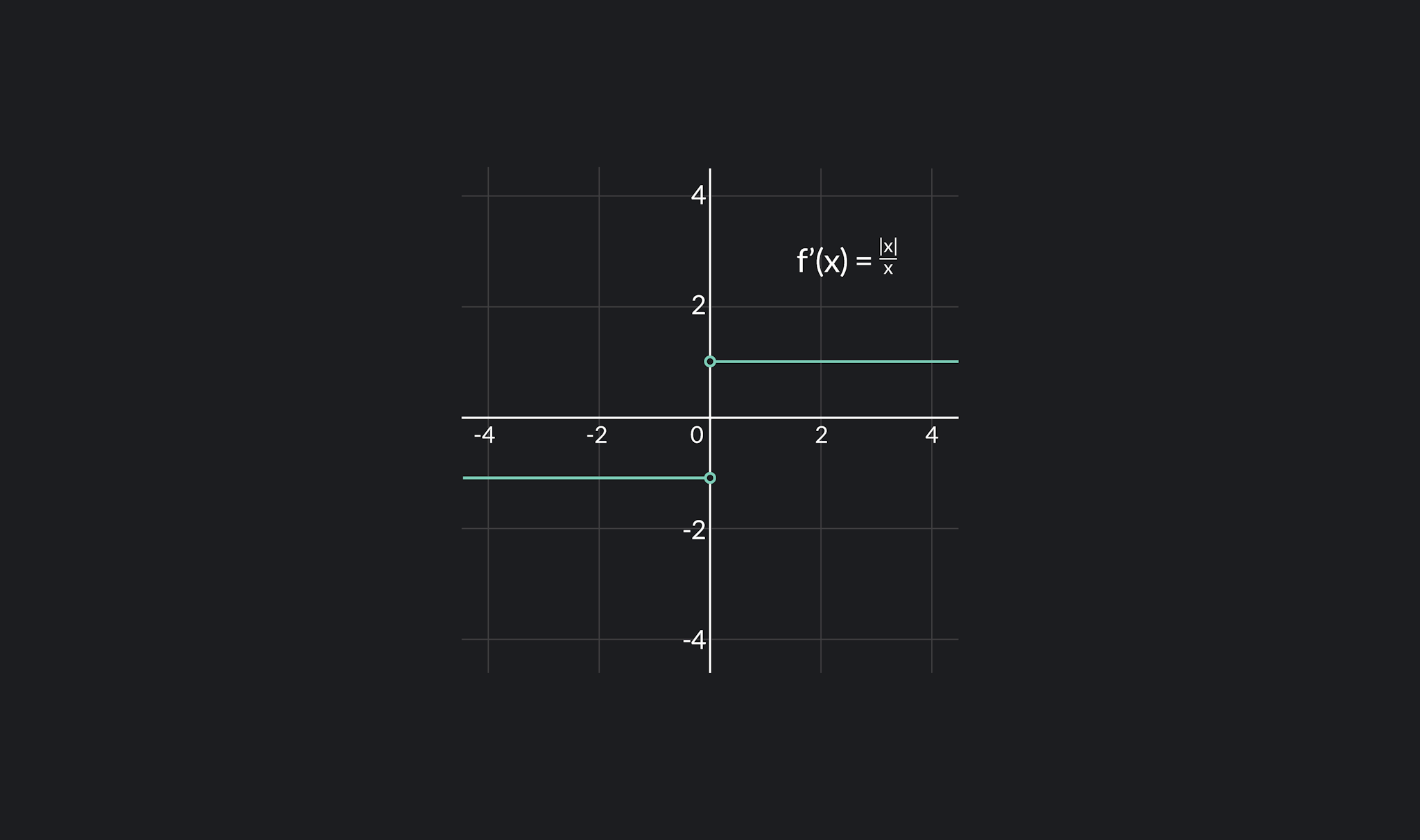
This means that for at does not exist. Thus, is not differentiable at .
So, although is continuous everywhere, it is not differentiable at . The same is true for many other functions, so make sure you understand the difference.
Common Derivative Formulas
Once you've learned how to determine if a function is differentiable, you can start to become familiar with the most common derivative formulas and their rules.
Here is a list of the most useful derivative rules to memorize:
Constant Rule
Power Rule
Chain Rule
Product Rule
Quotient Rule
Sum/Difference Rule
Trigonometry Rules
Logarithmic and Exponential Rules
Dr. Tim Chartier discusses the Product and Quotient derivative rules more in depth:
Explore Outlier's Award-Winning For-Credit Courses
Outlier (from the co-founder of MasterClass) has brought together some of the world's best instructors, game designers, and filmmakers to create the future of online college.
Check out these related courses:
Source: https://articles.outlier.org/what-does-differentiable-mean
0 Response to "If a Function is Differentiable Then It is Continuous Negation"
Post a Comment